


When I first heard about Never Alone my eyes started to sparkle. Not everybody knows that on top of the videogame passion, and so obviously for Nintendo, I am an Anthropologist; that is said in a banal way a cultures’, human kind and its society’s scholar. I have always considered videogames as part of our recent culture, combining anthropology and videogames in a concrete vision of media society.
Never Alone represents an interesting project for two main reasons: it is a game developed by Alaska Natives, and this is already culturally new, not being in any of the two cauldron we are used to, Western Games and Japan; the second reason is that it tells the Natives’ traditional stories, passed orally, not being an educational game, but developing a real gameplay so to wrap a real videogame product.
Every game mirrors, even though this time in a distinctive manner, its origin’s country. Before leaving you to the interview to the developer team (Upper One Games), which I thank for the kindness and helpfulness, I would like to point out how this game could represent a shy beginning for a new conception of a videogame origin brought to the mass market.
Exactly as Nintendo during the 80’s was bringing its vision of a different videogame conception, formed by the japans culture, so we could be in front of a shy, but not too much, attempt to bring new vision of how we can imagine a videogame and how we can make it.

1) How did you came up with the idea for a game about the natives?
Cook Inlet Tribal Council (CITC), a pioneering Alaska Native Tribal organization, was seeking a way to sustain their mission of connecting people to their potential. As a non-profit organization they historically relied on government funding. They spend several years exploring ideas for social enterprises. Additionally, CITC was seeking ways to could connect to our youth. One day sitting around the lunch table, Gloria O’Neill, President/CEO of Cook Inlet Tribal Council, said, “why not games?” Traditional stories have been used for thousands of years to pass wisdom from one generation to the next. CITC wanted to explore how video games could be used as a new medium for storytelling. Because CITC did not know how to make video games, we sought out the best in the industry with aligned values and a shared vision. A vision of how video games can be used to share, celebrate and extend cultures throughout the world. In the search CITC found E-Line Media, and decided to invite them to Alaska in January with the idea that if E-Line was willing to come up to Alaska in the coldest time of the year, they might be serious enough to take CITC’s vision for a video game seriously.

When E-Line came up to Alaska in January – and it was, indeed, very cold, we quickly released that E-Line and the Cook Inlet Tribal Council had a shared set of goals. We did quite a bit of research on how indigenous cultures were represented across all media (film, television, music, comics etc.) as well as on the independent game sector and together concluded that there was a real opportunity to celebrate, share and extend Alaska Native culture through games. That is how CITC decided to form Upper One Games.
The game itself was inspired by Alaska Native traditional stories. CITC sent E-Line a box of traditional Alaska Native stories. They really were the spark that ignited the theme in Never Alone. Additionally the game design team drew upon the value of interdependence, one of the core Iñupiaq values. (The Iñupiat People would not have been able to survive in such a harsh climate without being able to rely on each other.) The stories and the values were woven together to create this amazing game. One story in particular about the search for an endless blizzard, provides the spine of the game, with recurring themes from other stories filling in for the full game narrative.
In addition to the amazing stories and culture of the Alaska Native people, the team was inspired by great independent games like Limbo, Braid, Journey, Brothers as well as the whole lineage of great platform games all the way back to Pitfall and Donkey Kong. In fact, a number of the team members, including Sean Vesce the Creative Director worked on Pitfall: Mayan Adventure.
2) What was the purpouse and the message you had in mind to send to the players?
We really wanted to share and celebrate the Iñupiaq culture. Through the game we hope to spark interest in not only the Iñupiaq culture but other cultures from around the world. It is our belief that video games can deliver meaningful messages that engage and inspire the players. We see Never Alone as the beginning of a World Game movement were game developers look to make games that captivate the player’s imagination through meaningful gameplay.
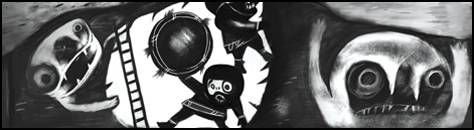
For Never Alone as an individual game, we were really seeking to share traditional Iñupiaq stories, while building the game play around interdependence, a cornerstone value of the Iñupiat People. Interdependence has been a key to survival for the Iñupiaq people, who live above the Arctic Circle in Alaska. Never Alone mirrors this value through game play. The game has two main characters and can be played via local co-op, or in single-player mode by switching between characters. However, both characters need to be played in order to succeed. This has allowed us to infuse Never Alone with both traditional stories and values, which inspired the Iñupiaq community to really embrace this game.

3) Have you ever thought about a Nintendo version of Never Alone? Have you made some steps in that direction?
Absolutely! Nintendo‘s one of the biggest and important names in video game history, so we’ve definitely thought a lot of about making a version for one of their platforms. We designed Never Alone to be approachable by a wide audience — something that Nintendo succeeds at year after year, decade after decade.
As for platform that would be, the obvious best one is the Wii U. Games like Super Mario 3D World, Mario Kart 8, and Super Smash Bros. have shown once again that Nintendo excels at making their games shine on their system. But with the Wii U, a lot of other companies are making great versions of their own games as well — like Guacamelee, Rayman Legends, Bayonetta 2, and so on. We’ve got a lot of great ideas for what a Wii U version of Never Alone could look like, and we’d love to bring it to Nintendo fans someday. Just picturing stamps for Little People and Nuna, or Miiverse fan artwork of Fox… it seems like a pretty great fit.

4) As the first native videogame company how did your parents, and other members of your family, saw your choice?
From an Alaskan Native perspective, as we started on this path, video games were really embraced as a new way to share and celebrate our stories. Traditional stories have been used for eons to pass wisdom from one generation to the next, and they saw video games as a new medium for storytelling. Alaska Native people have been able to adapt and survive through innovation, so the video game was seen as a way to adapt and innovate to share our stories.

5) Was it difficult to “recruit” the storytellers and working with other natives, maybe the older one?
One of the amazing things about this project is that it has been easy to engage people in the making of the game. Nearly three dozen Alaska Native people were involved during the course of the project — collaborating with the design team on everything from art and character development, to level design and overall narrative arc.
After several roundtable discussions exploring potential ideas for storytelling and engagement early in the development process, the group unanimously agreed that the Arctic region of Alaska — home to the Iñupiaq people— with its diverse micro-climates and landscapes provided the most opportunity for compelling and engaging gameplay and story lines.
The team included Alaska Native elders, storytellers, cultural ambassadors, historians, artists and youth representing numerous Alaska Native cultures from communities across the state — including Anchorage, Fairbanks, Juneau, Barrow, Anaktuvuk Pass, and Ambler.

6) What did they think about the idea of spreading your cultural heritage all over the world?
The idea of sharing our culture, stories, language, and values with the world was one of the key drivers behind this project. While our stories and language are unique to our region, we knew that the values and themes would resonate with others — regardless of where they were from — and inspire them.
7) Did you had to change some elements of the storytelling for gaming purposes? If yes, which one in particular?
This was one of the more challenging aspects of the game. The spine of the game is inspired by a story called Kunuuksaayuka. Robert “Nasruk” Cleveland was the storyteller that was recorded telling the Kunuuksaayuka story. Minnie Gray is the eldest surviving child of Nasruk (his Iñupiaq name). Stories are passed down orally in Iñupiaq culture, and while there isn’t a strict ownership in the legal sense of the stories, it is proper to acknowledge the storyteller who is most known for the story and to gain permission to use it. So we worked with Minnie Gray to help guide us in what was appropriate to change. What was amazing about Minnie is she acknowledged that each storyteller tells a story differently, they tell the story at a different pace, emphasize different aspects, and bring a different level of energy into their storytelling. So, Minnie saw it as natural us to modify the story.
One change we talked through her with her was the need to draw in other recurring themes from other traditional stories into the game to make the gameplay more engaging. So within the story we embedded other aspects of our traditional stories to extend the game narrative.
We also changed the main character from a young man to a young girl, and gave her a companion character in her journey. These types of changes took some time to talk through but they resulted in some of the richest aspects of the game.

8) After Never Alone do you think your being native could stop you from making other types of games?
This game was not made in a vacuum. We had to have partners that believed in what we were trying to achieve — and E-Line proved to be the perfect partner. They were open to learning about our culture and open to teaching us about the video game industry. It really was a development process that mirrored interdependence. This past summer we merged our companies and management structure. We truly believe this is something that can and should be replicated with other cultures. However, we realize that if we want to do that we must continue to make deep partnerships with those communities so that the game meets the same high bar of inclusive development that Never Alone has set.
9) What are your future plans?
We love Nuna and Fox. They’re the heart and soul of Never Alone. They’re a lot of fun to play both by themselves and together. We’re looking forward to creating more adventures for the two companions, and introducing them to more legendary characters of Alaska Native stories.
We’ve also been approached by numerous other cultures around the world who have seen the inclusive development process that we’ve created with the Alaska Native community, and are eager to harness the power of games to share, celebrate, and extend their own cultures. The future of World Games is bright!
For any further in-depth on the theme I suggest you to download these files from this link: CLICK HERE!